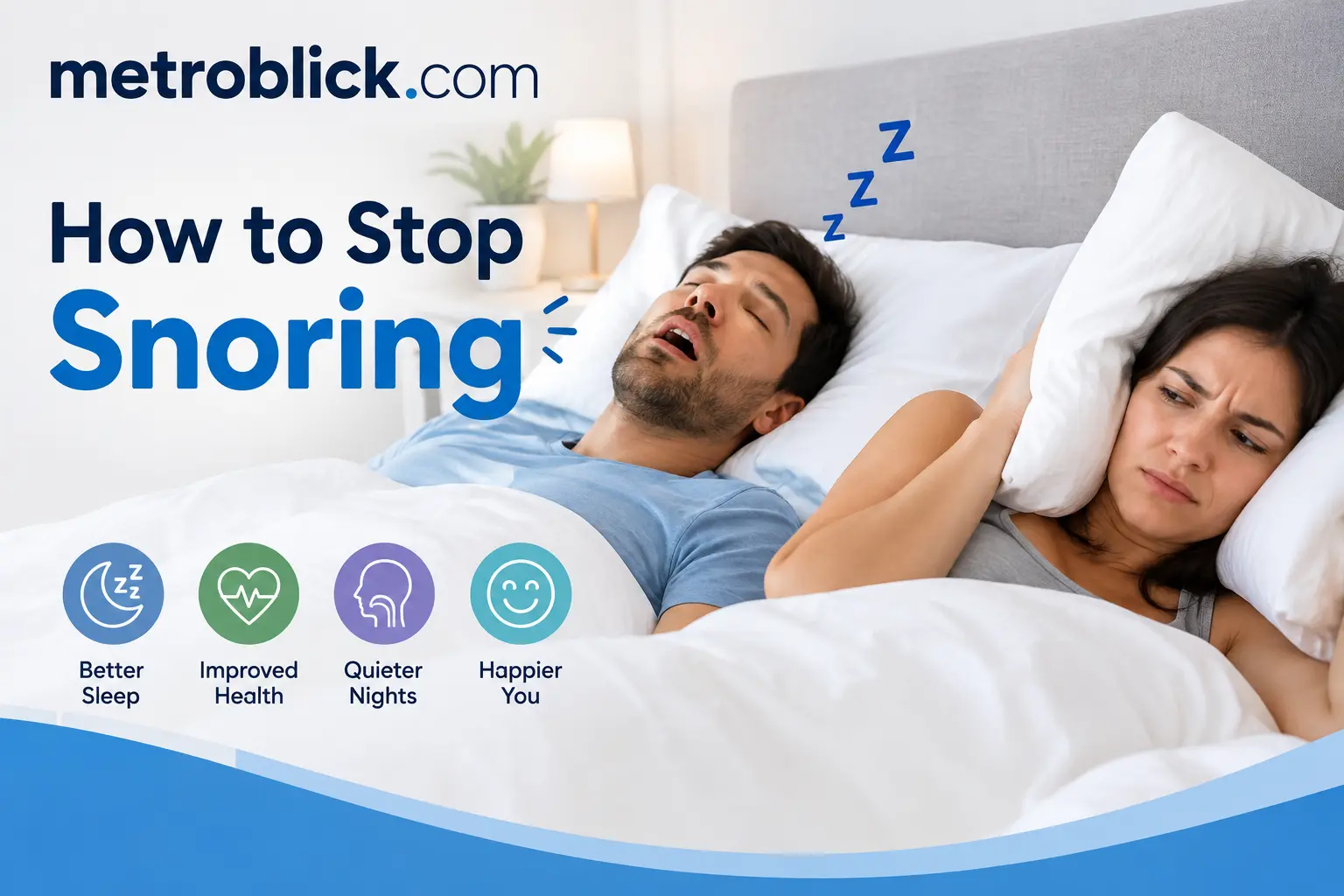
If you are looking for how to stop snoring, the first step is understanding why it happens. Snoring is usually caused by relaxed tissues in the nose, mouth, or throat vibrating as air moves through a narrowed upper airway during sleep. For some people, simple changes such as sleeping on the side, reducing alcohol, treating nasal congestion, or maintaining a healthy weight can make a noticeable difference. For others, persistent snoring may be connected to obstructive sleep apnea and needs medical evaluation.
Learning how to stop snoring is therefore not just about finding a quick overnight trick. The most useful approach is to identify the factor making the airway narrower and then choose a solution that addresses that cause. This guide explains the common causes, home remedies, sleep-position changes, nasal treatments, anti-snoring devices, oral appliances, sleep studies, CPAP, and the warning signs that should not be ignored.
How to Stop Snoring: What Actually Works?
There is no single remedy that works for everyone because snoring has different causes. A person who snores because they sleep on their back may improve simply by changing position, while someone with chronic nasal obstruction may need treatment for the underlying nasal problem. A person with obstructive sleep apnea may require a sleep evaluation and targeted treatment.
The most useful approaches include:
- Sleeping on your side instead of your back
- Maintaining a healthy weight when excess weight contributes to airway narrowing
- Limiting alcohol, particularly close to bedtime
- Avoiding smoking
- Addressing persistent nasal congestion or allergies
- Improving regular sleep habits
- Considering an appropriate mandibular advancement device when clinically suitable
- Seeking evaluation when snoring is accompanied by breathing pauses, choking, gasping, or excessive daytime sleepiness
Lifestyle measures are particularly useful when snoring is related to position, alcohol, smoking, weight, or other modifiable factors.
The important distinction is between simple snoring and sleep-disordered breathing. Snoring by itself does not automatically mean someone has sleep apnea, but loud or persistent snoring can be one of its most recognizable symptoms.
What Is Snoring and Why Does It Happen?
Snoring is a sound produced when tissues in the upper airway vibrate while you breathe during sleep. As the muscles of the tongue, soft palate, throat, and surrounding structures relax, the airway can become narrower than it is when you are awake. Air moving through that narrower passage can make the surrounding tissues vibrate.
Why is snoring louder on some nights than others?
The amount of airway narrowing can change depending on sleep position, alcohol consumption, nasal congestion, fatigue, body weight, medications, and the anatomy of the nose and throat.
The upper airway includes structures such as the nasal passages, tongue, soft palate, uvula, pharynx, and surrounding muscles. Problems affecting any of these areas can influence airflow.
Snoring can therefore be thought of as an airflow and tissue-vibration problem, rather than simply a noise coming from the throat.
What Causes Snoring?
Several factors can contribute to nighttime breathing noise.
Sleeping on your back: Gravity can allow the tongue and other soft tissues to move backward, reducing the space available for airflow.
Nasal obstruction: A blocked nose can make nasal breathing more difficult and encourage mouth breathing.
Alcohol: Alcohol relaxes muscles and can make airway narrowing more pronounced during sleep.
Smoking: Irritation and inflammation of the upper airway can contribute to breathing problems and snoring.
Excess body weight: Additional tissue around the upper airway can increase the tendency for the airway to narrow during sleep.
Anatomical factors: A deviated nasal septum, enlarged tonsils, enlarged adenoids, a long soft palate, a large tongue, or certain jaw structures can affect airflow.
Medications: Some sedating medicines, including sleeping pills, can worsen snoring or sleep-disordered breathing in some people.
Age: Muscle tone and tissue characteristics change with age, which can increase the tendency to snore.
Not everyone who snores has the same combination of causes. That is why a remedy that works for one person may do little for another.
How Your Sleeping Position Affects Snoring
Your sleeping position can have a surprisingly large effect on nighttime breathing.
When you sleep on your back, the tongue and soft tissues can shift toward the back of the throat. This may narrow the airway and increase tissue vibration. Side sleeping can reduce this effect for some people.
This is why positional therapy is often recommended as an initial lifestyle measure for people whose snoring is worse when lying on their back.
If you wake up with less snoring when sleeping on your side, that observation can provide a useful clue about what is contributing to the problem.
Common Lifestyle Factors That Make Snoring Worse
Daily habits can influence how narrow or relaxed the upper airway becomes during sleep.
The most important lifestyle factors include:
- Alcohol consumption before bed
- Smoking
- Excess body weight
- Irregular sleep
- Sleeping on the back
- Certain sedating medications
- Poor sleep habits
- Persistent nasal congestion
These factors do not affect everyone equally. However, identifying patterns can help you determine what changes are worth trying first.
Keeping a simple sleep and snoring diary can be useful. Record your bedtime, sleeping position, alcohol intake, nasal symptoms, and how severe the snoring seems the next morning. A partner or family member may also notice patterns that you do not.
How to Stop Snoring Naturally
For mild snoring, several non-invasive changes may reduce the problem.
Sleep on Your Side
Side sleeping is one of the simplest approaches to try. If you naturally roll onto your back, a body pillow, positional pillow, or other positioning aid may help you remain on your side.
Maintain a Healthy Weight
If excess weight contributes to airway narrowing, gradual weight management may reduce snoring. Weight loss should be approached as a broader health goal rather than as a guaranteed snoring cure.
Limit Alcohol Before Bed
Alcohol can relax muscles in the upper airway and make snoring worse. Reducing alcohol, particularly near bedtime, may help some people.
Avoid Smoking
Smoking can irritate the airway and is associated with snoring and other respiratory problems. Stopping smoking can benefit overall respiratory health as well as potentially reducing nighttime airway irritation.
Improve Sleep Habits
Going to bed and waking at consistent times, getting adequate sleep, and maintaining a comfortable sleeping environment can support healthier sleep.
These measures are supported as practical approaches to reducing snoring, although their effectiveness depends on the underlying cause.
How to Stop Snoring While Sleeping on Your Back
If snoring becomes noticeably worse when you lie on your back, changing your sleeping position may be particularly useful.
The goal is not simply to force yourself into an uncomfortable position. Instead, make side sleeping easier to maintain throughout the night.
Options include:
- A full-length body pillow
- A pillow designed for side sleeping
- A bed wedge
- Positional therapy devices
- A gentle reminder system that discourages rolling onto the back
Older positional techniques sometimes use an object attached to sleepwear to make back sleeping uncomfortable. Modern positional devices can offer a more practical alternative.
If side sleeping does not improve loud or persistent snoring, consider whether nasal obstruction, anatomy, medication, alcohol, or sleep apnea may be involved.
How to Improve Your Sleep Position
A good sleeping position should keep the head, neck, and spine reasonably comfortable while avoiding unnecessary airway compression.
Side sleeping is generally the most useful position to test if snoring is worse on the back. A pillow that supports the head without pushing the neck too far forward or backward may also improve comfort.
Raising the upper body slightly can help some people, particularly when nasal congestion or positional airway narrowing contributes to symptoms.
However, pillows are not a substitute for evaluation when there are signs of obstructive sleep apnea.
Can Losing Weight Help Reduce Snoring?
Yes, weight loss can reduce snoring for some people when excess body weight contributes to upper-airway narrowing.
Fat distribution around the neck and upper airway can influence the amount of space available for airflow during sleep. Reducing excess weight may decrease that pressure and can also improve other health risks associated with obesity.
However, body weight is only one possible factor. A person at a healthy weight can still snore because of nasal obstruction, airway anatomy, sleep position, alcohol, or obstructive sleep apnea.
For that reason, weight management should not be presented as a universal cure.
Does Alcohol Make Snoring Worse?
Alcohol can make snoring worse because it relaxes muscles in the upper airway. When those tissues become more relaxed during sleep, the airway may narrow and vibrate more easily.
The timing can matter. Drinking alcohol shortly before bedtime may be particularly unhelpful for someone who already snores.
If you notice that snoring is substantially louder after drinking, reducing alcohol consumption and avoiding it close to bedtime is a practical experiment.
Alcohol can also worsen breathing disturbances in people with obstructive sleep apnea, making this habit particularly important to discuss when nighttime breathing pauses are present.
Can Smoking Cause or Worsen Snoring?
Smoking can contribute to airway irritation and inflammation, which may make nighttime breathing more difficult.
If you smoke and regularly snore, quitting is beneficial for many aspects of health and may also reduce airway irritation. Even when smoking is not the main cause of snoring, eliminating it removes one potentially aggravating factor.
Secondhand smoke exposure can also irritate the respiratory tract, so maintaining a smoke-free sleeping environment is sensible.
Can Sleeping Pills Make Snoring Worse?
Some sleeping pills and other sedating medicines can relax muscles and may worsen snoring or sleep apnea.
This does not mean you should suddenly stop a prescribed medication. If you believe a medicine is affecting your nighttime breathing, discuss it with the healthcare professional who prescribed it.
Never replace a prescribed medicine with an over-the-counter sleep product simply because it is advertised as a natural sleep aid.
How to Stop Snoring From a Blocked or Stuffy Nose
Nasal congestion can make it harder to breathe comfortably through the nose. Common causes include allergies, colds, sinus problems, inflammation, nasal polyps, and structural issues such as a deviated septum.
When the nose is blocked, some people compensate by breathing through the mouth. This can change airflow through the upper airway and may contribute to snoring.
The right approach depends on why the nose is blocked.
For temporary congestion, addressing the underlying illness may be enough. For allergies, appropriate allergy management may help. Persistent one-sided obstruction, recurrent congestion, or difficulty breathing through the nose may require professional evaluation.
Do Nasal Strips and Nasal Dilators Help With Snoring?
Nasal strips and nasal dilators work by helping keep the nasal passages more open.
They may be useful when nasal narrowing is an important contributor to snoring. However, they do not directly treat every cause of airway vibration and should not be expected to cure snoring caused by obstruction deeper in the throat.
A useful question is: Does my snoring improve when my nose is easier to breathe through?
If the answer is yes, nasal treatments may be worth discussing or trying appropriately.
NHS guidance lists nasal dilators and nasal strips among possible approaches when blocked or narrow nasal airways contribute to snoring.
How Allergies and Nasal Problems Can Affect Snoring
Allergic rhinitis can cause nasal swelling, congestion, sneezing, and increased difficulty breathing through the nose. These symptoms may become particularly noticeable at night.
A deviated septum can also narrow one or both nasal passages. Nasal polyps and other structural problems can have a similar effect.
Treating the underlying nasal condition may therefore be more useful than simply masking the sound of snoring.
If nasal congestion is persistent, severe, one-sided, associated with recurrent nosebleeds, or accompanied by other concerning symptoms, professional assessment is appropriate.
How to Stop Snoring at Night
A practical nighttime routine can address several modifiable factors at once.
Before bed:
- Avoid alcohol close to bedtime.
- Avoid smoking.
- Address nasal congestion when appropriate.
- Prepare a comfortable side-sleeping position.
- Keep your bedroom dark, quiet, and comfortable.
- Follow a consistent sleep schedule.
- Take medicines only as directed.
- Avoid relying on unproven anti-snoring products.
Then observe what happens. If snoring remains loud and frequent despite these measures, especially when accompanied by breathing interruptions, it is time to investigate the underlying cause rather than continuously adding home remedies.
Can Raising Your Head While Sleeping Reduce Snoring?
Elevating the upper body can reduce snoring for some people by changing the position of the head, neck, and upper airway.
A wedge designed for sleeping can provide more consistent elevation than stacking several soft pillows. Too many pillows can bend the neck awkwardly and create discomfort.
Head elevation is not a guaranteed treatment, and it should not be used as a replacement for sleep apnea evaluation when warning signs are present.
Can Better Sleep Habits Help Reduce Snoring?
Good sleep habits can support healthier sleep, although they do not correct every anatomical or medical cause of snoring.
Useful habits include:
- Keeping a consistent bedtime and wake time
- Getting enough sleep
- Keeping the bedroom dark and comfortable
- Exercising regularly
- Avoiding heavy alcohol use before sleep
- Managing nasal symptoms
- Avoiding unnecessary sedating medicines
- Creating a relaxing pre-bed routine
Sleep deprivation itself is not a universal cause of snoring, but irregular or poor-quality sleep can affect overall sleep patterns and may make nighttime problems harder to manage.
Do Anti-Snoring Devices Really Work?
Some anti-snoring devices can help, but their usefulness depends heavily on why a person snores.
A device designed to open the nose may be useful for nasal obstruction but have little effect when the main problem is the tongue or soft palate. A mandibular advancement device works differently by repositioning the lower jaw and helping maintain space in the upper airway.
This is why choosing a device based on advertisements alone can be misleading.
Before buying an expensive product, identify the likely source of the snoring and determine whether sleep apnea needs to be ruled out.
Stay updated with the latest insights, fresh stories, and amazing new articles Burger King Careers.
Mandibular Advancement Devices for Snoring
A mandibular advancement device (MAD) is an oral appliance worn during sleep. It holds the lower jaw forward, which can help keep the upper airway more open.
These devices can be useful for selected adults with primary snoring and for some people with obstructive sleep apnea.
A professionally fitted, adjustable oral appliance is generally preferable to an unsuitable generic mouthpiece when medical treatment is indicated. The American Academy of Sleep Medicine and American Academy of Dental Sleep Medicine have supported oral appliance therapy for appropriate adults, including people with primary snoring and people with obstructive sleep apnea who cannot tolerate CPAP or prefer an alternative.
Possible issues include jaw discomfort, dental discomfort, excessive salivation or dry mouth, and changes in the bite. Follow-up is important.
Can Mouth and Tongue Exercises Help Stop Snoring?
Exercises involving the tongue, mouth, throat, and facial muscles are sometimes called oropharyngeal or orofacial exercises.
The idea is to improve muscle control and tone in structures involved in maintaining the upper airway.
Research suggests these exercises may help selected people with sleep-disordered breathing, but they should not be treated as a guaranteed cure for ordinary snoring or obstructive sleep apnea.
If exercises are used, consistency matters. They should also complement, rather than replace, appropriate evaluation when symptoms suggest sleep apnea.
What Is Orofacial Therapy and Can It Help?
Orofacial therapy involves targeted exercises for the tongue, lips, jaw, face, and muscles involved in upper-airway function.
The National Heart, Lung, and Blood Institute notes that therapy for mouth and facial muscles may be useful for some people with sleep apnea.
The important point is that this is different from randomly performing a few tongue exercises found online. Proper therapy is structured around the person’s specific breathing and muscle-function issues.
If significant snoring or sleep apnea is suspected, professional assessment should come before relying on exercises alone.
How to Stop Snoring Permanently
There is no universal permanent cure because snoring is a symptom with multiple possible causes.
A long-term solution requires identifying the factor responsible. For one person, changing sleep position may be enough. Another may need allergy treatment or management of chronic nasal obstruction. Someone with obstructive sleep apnea may need PAP therapy or another evidence-based treatment.
Even after successful treatment, snoring can return if the underlying factors change.
The realistic goal is therefore long-term control of the cause, not a promise that one product or trick will permanently eliminate the sound.
Is Snoring a Sign of Sleep Apnea?
Snoring can be a sign of obstructive sleep apnea (OSA), but ordinary snoring does not automatically mean a person has OSA.
OSA occurs when the upper airway repeatedly becomes blocked or significantly narrowed during sleep. Breathing can stop and restart throughout the night, sometimes without the person being aware of it.
Common clues include loud habitual snoring, observed pauses in breathing, gasping or choking during sleep, frequent awakenings, morning headaches, and excessive daytime sleepiness.
If these symptoms are present, treating the noise alone misses the more important issue.
Signs Your Snoring Could Be Sleep Apnea
Pay particular attention if your snoring occurs with:
- Breathing pauses noticed by another person
- Gasping or choking during sleep
- Repeated awakenings
- Very loud or disruptive snoring
- Excessive daytime sleepiness
- Difficulty concentrating
- Morning headaches
- Unrefreshing sleep
- Persistent fatigue
A person with sleep apnea may not know that their breathing is repeatedly stopping. A bed partner can sometimes notice the pattern before the sleeper does.
Loud Snoring, Gasping, and Breathing Pauses During Sleep
Loud snoring combined with gasping, choking, or observed breathing pauses deserves more attention than ordinary snoring alone.
These episodes can indicate repeated upper-airway obstruction.
If someone tells you that you stop breathing during sleep, do not dismiss it simply because you feel fine in the morning. Some people with sleep apnea are unaware of their nighttime symptoms.
A healthcare professional can determine whether further testing is appropriate.
Daytime Sleepiness and Other Warning Signs
Sleep apnea can affect daytime functioning because repeated breathing disturbances can fragment sleep.
Possible daytime symptoms include:
- Persistent tiredness
- Excessive sleepiness
- Trouble concentrating
- Morning headaches
- Mood changes
- Reduced alertness
Daytime sleepiness is especially important if it affects driving, operating machinery, working, or other activities that require sustained attention.
When Should You See a Doctor About Snoring?
Consider medical evaluation when:
- Lifestyle changes do not improve persistent snoring
- Snoring seriously disrupts your sleep or your partner’s sleep
- Someone notices breathing pauses
- You wake up choking or gasping
- You are consistently sleepy during the day
- You have other symptoms associated with sleep apnea
- Nasal obstruction is persistent or difficult to explain
The NHS specifically recommends seeking medical advice when lifestyle changes are not helping or when snoring occurs with daytime sleepiness, breathing interruptions, gasping, or choking.
How Is Snoring Diagnosed?
Diagnosis begins with understanding the pattern.
A healthcare professional may ask:
- How often do you snore?
- Is the snoring worse on your back?
- Do you drink alcohol before bed?
- Do you smoke?
- Are you frequently congested?
- Has anyone noticed breathing pauses?
- Do you wake up choking or gasping?
- Are you tired during the day?
- Do you take sleeping pills or other sedating medicines?
The mouth, throat, and nose may also be examined for factors such as nasal obstruction, enlarged tissues, or other anatomical features.
A partner’s observations can be particularly useful because the person who snores may not hear or remember what happens during sleep.
When Do You Need a Sleep Study?
A sleep study may be appropriate when symptoms suggest obstructive sleep apnea or another sleep-related breathing disorder.
The purpose is not simply to measure how loudly someone snores. It evaluates breathing patterns and other physiological signals during sleep.
Depending on the situation, testing may occur at home or in a sleep clinic.
If sleep apnea is suspected, the test can help determine whether repeated breathing disturbances are occurring and how severe they are.
What Is an At-Home Sleep Study?
An at-home sleep study, also called a home sleep apnea test in appropriate circumstances, allows certain patients to record sleep-related breathing information outside a laboratory.
Depending on the test, monitoring may include breathing effort, airflow, blood oxygen levels, heart rate, and other signals.
Home testing is convenient, but it is not suitable for every person or every type of sleep problem. A healthcare professional should determine whether it is appropriate.
If symptoms remain strongly suggestive of sleep apnea despite a negative or inconclusive home test, additional evaluation may be needed.
What Does an AHI Score Mean?
The Apnea-Hypopnea Index (AHI) is commonly used to describe the average number of apneas and hypopneas occurring per hour of sleep.
For adults, commonly used categories are:
- AHI below 5: generally not classified as obstructive sleep apnea
- AHI 5 to 14: mild sleep apnea
- AHI 15 to 30: moderate sleep apnea
- AHI above 30: severe sleep apnea
The AHI is important, but it should not be interpreted in isolation. Symptoms, oxygen levels, sleep quality, medical history, and other findings also matter.
An AHI number is not a measure of how loud someone snores. It measures breathing disturbances rather than snoring volume.
How Is Snoring Treated?
Treatment depends on the cause.
For simple snoring, management may include positional changes, weight management where appropriate, reducing alcohol, stopping smoking, treating nasal congestion, or using a suitable oral appliance.
For obstructive sleep apnea, treatment can include positive airway pressure, oral appliance therapy, lifestyle measures, positional therapy, and selected surgical approaches.
The goal should be to treat the underlying breathing problem rather than simply silence the snoring sound.
CPAP and Other Positive Airway Pressure Treatments
Continuous positive airway pressure (CPAP) uses a machine to deliver pressurized air through a mask, helping keep the upper airway open during sleep.
Other forms of positive airway pressure include APAP, which automatically adjusts pressure within a prescribed range.
PAP therapy is a major treatment for obstructive sleep apnea, particularly when clinically indicated. AASM guidance recommends PAP therapy for adults with OSA in several clinical situations, including those with excessive sleepiness or impaired sleep-related quality of life.
CPAP is not simply a general-purpose anti-snoring gadget. It is primarily used to treat diagnosed sleep-disordered breathing.
If someone is considering PAP therapy, proper diagnosis, mask selection, pressure settings, and follow-up can make treatment more comfortable and effective.
Oral Appliances for Snoring and Sleep Apnea
Oral appliances can reposition the lower jaw or tongue to help maintain an open airway.
A mandibular advancement device is one of the best-known types. It moves the lower jaw forward during sleep, increasing space behind the tongue in suitable patients.
For adults with obstructive sleep apnea who cannot tolerate CPAP or prefer an alternative, a custom, adjustable oral appliance may be considered. For primary snoring, oral appliance therapy may also be appropriate after sleep apnea has been considered or excluded.
A qualified dental professional with appropriate sleep-medicine experience can help with fitting and follow-up.
When Is Surgery Used to Treat Snoring?
Surgery is generally considered when an anatomical problem contributes to airway obstruction and other appropriate approaches have not provided adequate results.
Depending on the underlying problem, procedures may address the nose, tonsils, palate, throat, jaw, or other airway structures.
Surgery is not a guaranteed permanent solution. Snoring can return, and every procedure has potential risks and limitations.
For obstructive sleep apnea, surgical options can include procedures that enlarge the airway or address specific anatomical causes. Selected patients may also be considered for treatments such as hypoglossal nerve stimulation.
The appropriate procedure depends on the individual’s anatomy and diagnosis.
How to Stop Snoring Tonight: A Simple Checklist
If you want practical steps to try tonight, start with the lowest-risk measures:
- Sleep on your side rather than your back.
- Avoid alcohol close to bedtime.
- Avoid smoking.
- Address nasal congestion appropriately.
- Use a comfortable pillow that keeps your neck in a neutral position.
- Consider gentle upper-body elevation if it is comfortable.
- Keep your bedroom dark, quiet, and comfortable.
- Avoid taking sleeping pills unless they have been recommended for you.
- Ask your partner whether they notice breathing pauses, choking, or gasping.
These steps may reduce ordinary snoring, but they should not delay medical evaluation when sleep apnea warning signs are present.
How Long Does It Take to Reduce Snoring?
The timeline depends entirely on the cause.
Position-related snoring may improve as soon as a person consistently avoids sleeping on their back. Snoring related to alcohol may improve when alcohol is removed from the bedtime routine. Nasal congestion may improve when its underlying cause is treated.
Weight-related changes generally take longer because meaningful body-composition changes do not happen overnight.
Oral appliances and PAP therapy can reduce nighttime breathing problems once they are properly fitted and used, although adjustment and follow-up may be necessary.
If there is no meaningful improvement after reasonable lifestyle changes, investigate the cause instead of endlessly trying new products.
Can You Stop Snoring Without Medical Treatment?
Some people can substantially reduce or eliminate snoring through lifestyle and positional changes.
This is more likely when the problem is related to factors such as:
- Back sleeping
- Alcohol
- Smoking
- Nasal congestion
- Excess body weight
- Poor sleep habits
However, persistent snoring can also result from anatomical narrowing or obstructive sleep apnea.
The key question is not simply whether you can make the sound quieter. It is whether you are breathing normally during sleep.
If there are breathing pauses, choking, gasping, or significant daytime sleepiness, professional assessment is more important than continuing to experiment with home remedies.
FAQs
Can I reduce snoring naturally?
Yes. Side sleeping, reducing alcohol before bedtime, avoiding smoking, addressing nasal congestion, maintaining a healthy weight when appropriate, and improving sleep habits can reduce snoring for some people. The effectiveness depends on the underlying cause.
What is the fastest way to reduce snoring?
If the problem is positional, sleeping on your side may provide a quick improvement. If alcohol or nasal congestion is contributing, addressing those factors may also help. There is no single fast solution that works for every cause.
Can snoring be stopped immediately?
Sometimes a positional or environmental change can reduce snoring during the same night, but persistent snoring usually requires identifying its underlying cause.
Why do I snore every night?
Nightly snoring may be related to sleeping position, nasal obstruction, airway anatomy, alcohol, smoking, body weight, medications, or obstructive sleep apnea. Frequent snoring is worth discussing with a healthcare professional if lifestyle changes do not help.
Does sleeping on your side really help with snoring?
It can. Snoring is often worse when a person sleeps on their back because the tongue and soft tissues can move backward and narrow the airway. Side sleeping can reduce this positional effect.
Can losing weight reduce snoring?
It can help when excess body weight contributes to upper-airway narrowing. However, weight is only one possible cause, so people at a healthy weight can still snore.
Do nasal strips work for snoring?
Nasal strips can help some people when nasal narrowing contributes to their snoring. They do not treat every cause, particularly obstruction occurring farther back in the throat.
Are nasal dilators better than nasal strips?
Both are designed to improve nasal airflow, but they work differently. Which option is more useful depends on the source of nasal narrowing and personal comfort.
Does alcohol make snoring worse?
Yes, alcohol can relax upper-airway muscles and increase airway narrowing during sleep. Limiting alcohol, particularly close to bedtime, may reduce nighttime breathing problems.
Can smoking make snoring worse?
Smoking can irritate the airway and contribute to inflammation. Stopping smoking can remove this potential aggravating factor and provides broader health benefits.
Can sleeping pills cause snoring?
Some sleeping pills and sedating medicines can relax airway muscles and may worsen snoring or sleep apnea. Never stop prescribed medication without discussing it with the prescriber.
What is a mandibular advancement device?
It is an oral appliance that moves the lower jaw forward during sleep. This can help maintain space in the upper airway and may reduce snoring in appropriately selected adults.
Are anti-snoring mouthpieces safe?
Safety depends on the device and the person using it. A professionally fitted, adjustable oral appliance is generally preferable when medical treatment is indicated. Jaw discomfort, dental discomfort, and bite changes can occur, so follow-up matters.
Can mouth exercises reduce snoring?
Mouth, tongue, and facial exercises may help some people, particularly as part of orofacial therapy. They should not be considered a guaranteed treatment for every type of snoring or sleep apnea.
Is loud snoring always sleep apnea?
No. Many people snore without having sleep apnea. However, loud habitual snoring combined with breathing pauses, gasping, choking, or excessive daytime sleepiness can be a warning sign.
How can I tell if I have sleep apnea?
You may notice loud snoring, poor-quality sleep, morning headaches, or daytime sleepiness, but many nighttime symptoms are noticed by a partner rather than the sleeper. Breathing pauses, choking, and gasping are particularly important warning signs. A sleep evaluation can provide a diagnosis.
What does an AHI score tell you?
AHI estimates the average number of apneas and hypopneas per hour of sleep. In adults, 5–14 is commonly categorized as mild sleep apnea, 15–30 as moderate, and above 30 as severe. The number should be interpreted alongside symptoms and other clinical findings.
Can an at-home sleep study diagnose sleep apnea?
An appropriate home sleep apnea test can help diagnose obstructive sleep apnea in selected patients. It is not suitable for every sleep problem, so a healthcare professional should determine whether home testing is appropriate.
Does CPAP stop snoring?
When snoring is caused by obstructive sleep apnea, effective positive airway pressure therapy can reduce the airway obstruction that produces snoring. CPAP should be viewed as a medical treatment for sleep-disordered breathing rather than a general anti-snoring product.
Can snoring be permanently cured?
There is no universal permanent cure because snoring has many causes. Long-term control is possible when the underlying cause is identified and appropriately treated, but symptoms can return if contributing factors change.
When should I see a doctor about snoring?
Seek medical advice if lifestyle measures are not helping, snoring significantly affects daily life or a partner’s sleep, or if there are breathing pauses, gasping, choking, or significant daytime sleepiness.
Conclusion
Snoring is usually the result of vibration caused by narrowed or relaxed tissues in the upper airway, but the reason for that narrowing varies from person to person. Sleeping on the side, reducing alcohol, avoiding smoking, managing nasal congestion, maintaining a healthy weight when appropriate, and improving sleep habits are practical first steps for many people.
When those measures do not work, the next step is not necessarily another anti-snoring product. Persistent symptoms may require evaluation of the nose, throat, jaw, tongue, and sleeping breathing pattern. Options such as mandibular advancement devices, orofacial therapy, CPAP, and selected surgical treatments can be appropriate depending on the diagnosis.
Most importantly, do not ignore snoring accompanied by breathing pauses, choking, gasping, or significant daytime sleepiness. Those symptoms can indicate obstructive sleep apnea, which requires proper assessment and treatment rather than simply trying to make the snoring quieter.
Stay updated with the latest insights, fresh stories, and amazing new articles where to learn gardening online.