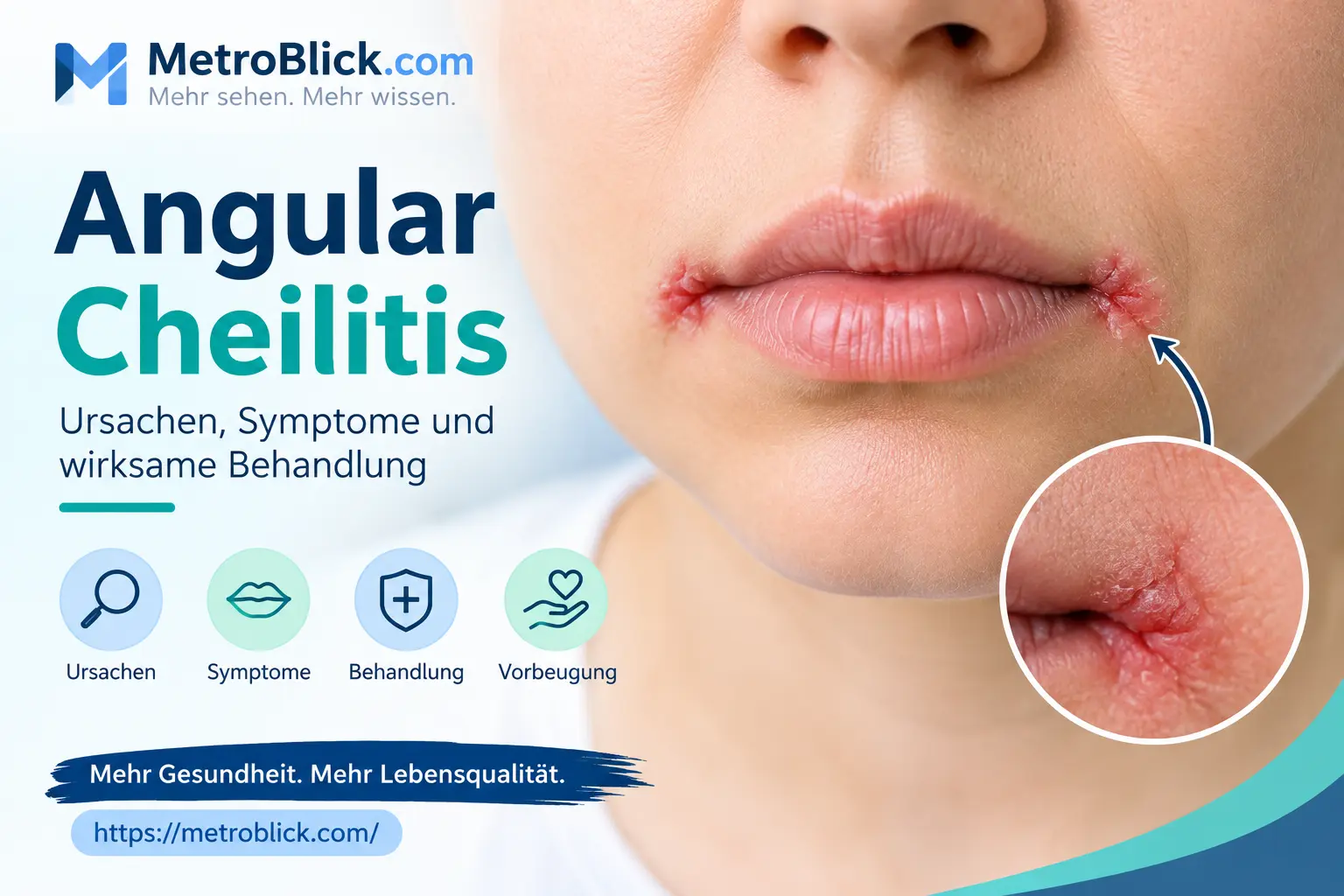
Angular cheilitis is a common condition that affects the corners of the mouth, causing irritation, dryness, cracking, soreness, redness, and sometimes crusting or bleeding. It can affect one or both sides and may be triggered by saliva, dry skin, dentures, nutritional deficiencies, yeast or bacterial involvement, or several factors working together.
If you have painful cracks at the corners of your lips and are wondering what is causing them, whether they are contagious, how long they will last, or what you can do to make them heal, this guide explains everything from symptoms and causes to diagnosis, treatment, prevention, and recurrence.
The important thing to understand is that not every cracked mouth corner has exactly the same cause. Treating the underlying problem is often just as important as soothing the irritated skin.
What Is Angular Cheilitis?
Angular cheilitis is inflammation of the skin at one or both corners of the mouth, also called the oral commissures or labial commissures. It is sometimes called angular stomatitis, cheilosis, perleche, or perlèche.
The corners of the mouth are especially vulnerable because they are constantly moving when you eat, drink, speak, laugh, and open your mouth. Saliva can collect in these folds, repeatedly wetting the skin. When the area dries, cracks, and becomes irritated, inflammation can develop. In some cases, Candida yeast or bacteria such as Staphylococcus aureus can become involved.
A simple way to understand the process is:
Moisture or irritation → skin barrier damage → cracking → inflammation → possible secondary infection.
This is why simply applying an antimicrobial product does not always solve the problem. If saliva exposure, an ill-fitting denture, dry lips, or another underlying trigger continues, the skin may keep breaking down.
Angular Cheilitis Symptoms and Signs
The symptoms usually appear directly at the corners of the mouth. They can develop on one side or, more commonly, on both sides.
Common signs include:
- Cracks or fissures at the mouth corners
- Soreness or tenderness
- Redness or discoloration
- Dry, irritated skin
- Burning or stinging
- Swelling
- Crusting
- Oozing or weeping
- Bleeding when the mouth is stretched
- Pain while eating or opening the mouth
- Pale, soggy-looking skin caused by excess moisture
- Repeated splitting of the same area
The cracks can become particularly painful when you smile, yawn, eat, or brush your teeth because these movements stretch the affected skin. DermNet notes that fissures may be worse with mouth opening and that blistering, erosion, oozing, crusting, and bleeding can also occur.
What does it look and feel like?
A typical case may look like a small red or irritated patch at the corner of the mouth with a vertical or diagonal crack. The area can appear wet, pale, crusty, or swollen.
Skin color can also affect how the condition appears. On darker skin tones, redness may be less obvious, and the affected area can appear pale or darker around the edges instead.
What Causes Angular Cheilitis?
There is not always one single cause. In many people, several factors contribute at the same time.
One of the most common mechanisms is saliva collecting at the corners of the mouth. Saliva contains digestive enzymes that can irritate the skin when exposure is prolonged. Repeated wetting and drying weakens the skin barrier and makes cracking more likely.
Other possible causes include:
- Candida yeast overgrowth
- Bacterial infection
- Dry or chapped lips
- Excessive lip licking
- Drooling during sleep
- Ill-fitting dentures
- Changes in facial structure with aging
- Worn-down teeth
- Misaligned teeth
- Nutritional deficiencies
- Certain skin conditions
- Dry mouth
- Some medications
- Smoking
- Rapid weight loss
- Certain systemic illnesses
In some cases, the condition begins because the skin becomes damaged first and microorganisms then take advantage of the broken skin. In others, an infection or underlying medical issue may be an important contributor.
That distinction matters because treatment should match the suspected cause.
Common Risk Factors for Angular Cheilitis
Anyone can develop irritated mouth corners, but certain circumstances make it more likely.
Important risk factors include:
- Very dry or chapped lips
- Frequent lip licking
- Excess saliva or drooling
- Dentures that do not fit properly
- Reduced vertical height between the jaws
- Missing or heavily worn teeth
- Oral thrush
- Diabetes
- Inflammatory bowel disease
- Certain immune-system conditions
- Atopic dermatitis or sensitive skin
- Smoking
- Rapid weight loss
- Poor nutritional intake
- Iron deficiency
- Riboflavin deficiency
- Vitamin B12 deficiency
- Folate deficiency
- Zinc deficiency
- Protein deficiency
- Dry mouth
- Some medications that cause dry lips
- Corticosteroid use in certain circumstances
Children can also develop irritation around the mouth from drooling, pacifiers, or thumb-sucking. Older adults may have additional risk because of dentures, changes in facial contours, tooth loss, or reduced skin elasticity.
Having a risk factor does not automatically mean it is the cause in a particular person.
Types of Angular Cheilitis
There is no single universally used classification that applies to every case, but the condition can be understood according to the factors involved.
Irritant-related inflammation
Repeated saliva exposure, lip licking, moisture, or friction can damage the skin and produce inflammation.
Infectious involvement
Candida species and bacteria such as Staphylococcus aureus can be found in affected areas. Sometimes more than one organism may be involved.
Nutritional-associated cases
Iron and certain B-vitamin deficiencies, along with other nutritional problems, can contribute to inflammation around the mouth.
Denture-related cases
Poorly fitting dentures or changes in the bite can create deeper folds where saliva collects.
Mixed cases
A person may have several contributing factors at once. For example, an older adult with dentures may have saliva pooling in the mouth corners, damaged skin, and secondary Candida involvement.
Angular Cheilitis vs. Cold Sores
Cracked mouth corners are frequently confused with cold sores, but they are different conditions.
Cold sores are caused by herpes simplex virus, usually HSV-1, and are contagious. Angular cheilitis itself is considered non-contagious.
Some differences can help:
| Feature | Mouth-corner inflammation | Cold sores |
|---|---|---|
| Typical location | Corners of the mouth | Often lip border or nearby facial area |
| Common appearance | Cracks, redness, erosion, crusting | Small fluid-filled blisters followed by sores/crusting |
| Main mechanism | Irritation, moisture, structural factors, nutritional or microbial factors | Herpes simplex virus |
| Contagious | Generally no | Yes |
| Typical trigger | Saliva, dryness, dentures, infection, nutritional issues | HSV reactivation |
However, appearance alone cannot always provide a definite diagnosis. A healthcare professional may need to examine the lesion, especially when symptoms are unusual, persistent, recurrent, or severe.
Angular Cheilitis vs. Chapped Lips
Chapped lips usually affect the lips themselves, particularly the exposed lip surface, while angular inflammation specifically centers on the corners.
Chapped lips can contribute to mouth-corner cracking because damaged, dry skin is easier to irritate. However, widespread dry lips and a sharply cracked corner are not necessarily the same condition.
If moisturizing the lips improves general dryness but the corners continue to split, another contributing factor may need attention.
Other forms of cheilitis can also cause dry, scaly, inflamed lips, so persistent symptoms should not automatically be assumed to be ordinary chapping.
Is Angular Cheilitis Contagious?
Generally, no. Angular cheilitis itself is not considered contagious, meaning you normally do not catch it from another person through ordinary contact.
However, this does not mean every sore around the mouth is non-contagious. Cold sores caused by herpes simplex virus are contagious, and some other infections can spread.
If you are unsure whether a lesion is a cracked mouth corner or a cold sore, avoid sharing lip products and direct mouth-to-mouth contact until you know what you are dealing with.
How Is Angular Cheilitis Diagnosed?
Diagnosis is usually based on the appearance of the affected area, your symptoms, medical history, and examination of the mouth and surrounding skin.
A healthcare professional may ask about:
- How long the problem has been present
- Whether it keeps returning
- Whether one or both corners are affected
- Lip licking or drooling
- Dentures
- Diet and nutrition
- Recent medications
- Oral thrush
- Other skin problems
- Diabetes or other medical conditions
- Previous treatments and whether they worked
If the cause is unclear or treatment does not work, additional testing may be considered.
A swab can sometimes help identify Candida, Staphylococcus aureus, or another organism. Blood tests may be appropriate when nutritional deficiency or another underlying condition is suspected. A biopsy is not normally required for straightforward cases but may be considered when another diagnosis needs to be excluded.
This is important because several conditions can resemble irritated mouth corners, including impetigo, eczema, allergic contact dermatitis, irritant contact dermatitis, herpes simplex, oral lichen planus, and other forms of cheilitis.
Stay updated with the latest insights, fresh stories, and amazing new articles cultural festivals.
Angular Cheilitis Treatment Options
Treatment depends on what is causing the inflammation.
For mild saliva-related irritation, protecting the skin barrier can be enough. A thick, bland emollient can reduce moisture-related damage and prevent the skin from repeatedly cracking. DermNet lists frequent use of a lip balm or thick emollient ointment among general treatment measures.
Depending on the underlying cause, a healthcare professional may recommend:
- Barrier ointments or emollients
- Antifungal treatment for Candida involvement
- Antibiotic treatment for confirmed or suspected bacterial infection
- Anti-inflammatory treatment in selected cases
- Treatment for oral thrush when present
- Correction or replacement of poorly fitting dentures
- Dental treatment where tooth position or bite contributes
- Correction of nutritional deficiencies
- Management of an underlying medical condition
The key principle is simple: treat the cause, protect the skin, and remove the trigger.
Do not automatically assume that every case needs an antifungal cream or antibiotic. Different causes require different approaches, and unnecessary antimicrobial treatment can be inappropriate.
Best Creams for Angular Cheilitis
There is no single cream that is best for every person because the correct treatment depends on the cause.
Barrier ointments
A thick protective ointment can be useful when saliva and dryness are major contributors. Petroleum jelly or another bland emollient can help protect cracked skin from repeated moisture exposure and friction.
Antifungal creams
When Candida is contributing to the problem, a clinician may recommend an appropriate topical antifungal. The exact product and duration depend on the diagnosis and individual circumstances.
Antibiotic treatment
If bacterial infection is involved, a healthcare professional may recommend a topical or oral antibiotic depending on the severity and organism involved.
Steroid-containing products
Topical corticosteroids may sometimes be used to reduce significant inflammation, but they should not be used casually around an undiagnosed mouth lesion. If an infection is present, inappropriate steroid use can potentially make the situation worse or mask important symptoms.
Because treatment can differ substantially between irritant, fungal, bacterial, allergic, and nutritional causes, persistent cases are better assessed rather than repeatedly switching between creams.
Home Remedies for Angular Cheilitis
Simple home care can support healing, particularly when irritation and dryness are contributing factors.
Protect the corners of the mouth
Apply a bland protective ointment to reduce friction and protect the skin from saliva.
Stop licking the lips
Lip licking may temporarily make the area feel moist, but repeated saliva exposure can increase irritation and prolong the problem.
Keep the area gently clean
Wash gently and avoid aggressive scrubbing. Pat the area dry rather than rubbing it.
Avoid irritating products
During a flare, consider avoiding products that sting or irritate the affected area, including harsh mouthwashes, strongly flavored oral products, and irritating cosmetics.
Stay hydrated
Adequate fluid intake supports normal skin and mucosal function, although drinking more water alone will not cure every case.
Avoid picking the crusts
Picking can reopen cracks, delay healing, and increase the risk of secondary infection.
Protect the lips from harsh weather
Cold, dry, windy conditions can worsen dry lips and contribute to repeated cracking.
Home care can reduce irritation, but it should not replace medical assessment when symptoms are severe, persistent, recurrent, or associated with another illness.
Can Angular Cheilitis Heal on Its Own?
Yes, some mild cases can resolve without prescription treatment, especially when the main trigger is temporary irritation and the skin is protected.
However, spontaneous improvement does not happen in every case. If Candida, bacteria, nutritional deficiency, dentures, diabetes, chronic dryness, or another underlying factor is contributing, the problem may continue until that factor is addressed.
DermNet reports that many cases resolve by themselves and that improvement often occurs within the first days of appropriate treatment, with many cases resolving within around two weeks.
If the cracks repeatedly reopen or do not improve, it is worth looking for an underlying cause rather than continuing to treat the surface alone.
How Long Does Angular Cheilitis Last?
The duration varies depending on the cause and whether the trigger is removed.
A mild case caused primarily by irritation may improve relatively quickly once the skin is protected. Cases involving infection, nutritional deficiency, dental problems, or chronic skin irritation may take longer.
DermNet notes that the condition can last from a few days to persist indefinitely depending on the underlying cause, while many appropriately treated cases resolve within about two weeks.
If there is no clear improvement after reasonable self-care, or if the condition continues for several weeks, professional assessment is appropriate.
Why Does Angular Cheilitis Keep Coming Back?
Recurrence usually means that one or more contributing factors remain.
Common reasons include:
- Continued lip licking
- Persistent saliva pooling
- Dry or damaged lips
- Ill-fitting dentures
- Changes in the bite or tooth structure
- Recurrent Candida
- Recurrent bacterial involvement
- Nutritional deficiency
- Poorly controlled underlying conditions
- Chronic dry mouth
- Smoking
- Skin conditions such as eczema
- Continued exposure to an irritant or allergen
For recurrent cases, simply repeating the same cream may not solve the problem. A clinician or dentist may need to determine why the mouth corners continue to become damaged.
In older adults, changes in facial structure and reduced support from teeth or dentures can create deeper folds where moisture collects. Dental assessment can therefore be an important part of managing persistent cases.
Angular Cheilitis and Vitamin Deficiency
Nutritional deficiency can contribute to mouth-corner inflammation, particularly deficiencies involving iron and certain B vitamins.
Potential nutritional associations include:
- Iron deficiency
- Riboflavin or vitamin B2 deficiency
- Vitamin B12 deficiency
- Folate deficiency
- Zinc deficiency
- Protein deficiency
This does not mean that everyone with cracked mouth corners has a vitamin deficiency.
Taking large amounts of vitamins without knowing whether you are deficient is not a reliable treatment strategy. If symptoms are persistent, recurrent, severe, or accompanied by other signs of poor nutrition, a healthcare professional can decide whether blood tests or nutritional evaluation are appropriate.
DermNet specifically identifies iron, riboflavin, protein, zinc, vitamin B12, and folate deficiency among possible risk factors.
Angular Cheilitis in Children and Adults
This condition can occur at any age.
In babies and young children
Drooling, pacifiers, thumb-sucking, and repeated moisture around the mouth can irritate the skin. Children may also have eczema or other skin sensitivities that make the area more vulnerable.
In teenagers and younger adults
Dry lips, lip licking, skin conditions, oral irritation, nutritional issues, and infections may contribute.
In older adults
Dentures, missing teeth, worn teeth, changes in facial structure, dry mouth, medications, and nutritional problems become particularly relevant.
If a child has persistent cracking, significant pain, fever, spreading redness, or difficulty eating and drinking, medical assessment is appropriate rather than assuming the problem is simple dryness.
Angular Cheilitis and Dentures
Dentures can play an important role in recurrent mouth-corner inflammation.
When dentures do not fit properly or the relationship between the upper and lower jaws changes, the corners of the mouth may fold inward. Saliva can collect in these folds, creating an environment that encourages irritation and sometimes microbial overgrowth.
Poorly fitting dentures may therefore need adjustment, repair, replacement, or dental assessment rather than simply treating the skin.
Dentists may also evaluate tooth wear, missing teeth, bite changes, and the vertical dimension of the bite. Correcting the underlying oral structure can reduce the folds where saliva accumulates.
Good denture hygiene is also important, particularly when Candida or oral thrush is suspected.
How to Prevent Angular Cheilitis
Prevention focuses on protecting the skin barrier and addressing the factors that make cracking more likely.
Useful measures include:
- Avoid licking the corners of your mouth.
- Keep the lips moisturized with a bland protective product.
- Keep dentures clean and properly fitted.
- Maintain good oral hygiene.
- Treat persistent dry mouth with appropriate medical advice.
- Eat a balanced diet containing adequate iron, protein, and B vitamins.
- Avoid smoking.
- Protect the lips from extreme cold and wind.
- Avoid products that repeatedly irritate your lips.
- Manage underlying medical conditions as advised by your healthcare professional.
- Rinse the mouth after inhaled corticosteroid use when instructed to do so.
- Address recurrent oral thrush when present.
If the condition repeatedly returns, prevention should focus on identifying the reason for recurrence rather than simply applying another round of topical treatment.
When to See a Doctor for Angular Cheilitis
Mild irritation can sometimes be managed with basic skin protection, but medical or dental advice is appropriate when:
- Symptoms are severe or very painful.
- The area keeps bleeding.
- The problem does not improve.
- It repeatedly comes back.
- The redness or swelling is spreading.
- There is significant pus or extensive crusting.
- You also have sores elsewhere in the mouth.
- You have symptoms of oral thrush.
- You suspect a nutritional deficiency.
- You have diabetes or another condition that may affect healing.
- You wear dentures that no longer fit properly.
- The diagnosis is uncertain.
- A mouth-corner lesion looks different from previous episodes.
- You have a persistent sore that does not heal.
Persistent mouth lesions should not automatically be labeled as this condition because several other disorders can look similar. Professional evaluation can help distinguish ordinary inflammation from infection, allergic or irritant dermatitis, herpes simplex, other cheilitis conditions, and less common disorders.
FAQs
What is the fastest way to get rid of cracked mouth corners?
The fastest approach depends on the cause. Protecting the area with a bland barrier ointment and avoiding lip licking can help when saliva and irritation are responsible. If Candida, bacteria, nutritional deficiency, or a dental problem is involved, treating that underlying issue is more important than simply moisturizing the skin.
Is angular cheilitis a fungal infection?
It can involve Candida yeast, but it is not always caused by fungus. Saliva-related irritation, dry skin, dental factors, nutritional deficiencies, and bacterial involvement can also contribute.
Can I put petroleum jelly on cracked mouth corners?
A bland protective ointment such as petroleum jelly can help protect irritated skin from saliva, dryness, and friction. It does not treat every underlying cause, however.
Does toothpaste cause angular cheilitis?
Certain toothpaste ingredients can irritate or trigger allergic contact reactions around the lips in susceptible people. If symptoms repeatedly occur after using a particular product, a healthcare professional may consider contact dermatitis as part of the evaluation.
Can stress cause angular cheilitis?
Stress is reported as a possible associated factor, but it should not automatically be considered the direct cause. Other factors such as saliva exposure, infection, nutritional deficiency, skin disease, or dental problems may be more relevant.
Is angular cheilitis contagious through kissing?
The condition itself is generally non-contagious. However, sores around the mouth can have other causes, including herpes simplex, which can spread through close contact.
Can a vitamin deficiency cause cracked corners of the mouth?
Yes. Iron deficiency and deficiencies involving riboflavin, vitamin B12, folate, zinc, or protein have been associated with this type of mouth-corner inflammation. Testing is preferable to assuming a deficiency based only on symptoms.
How long does it normally take to heal?
Some mild cases improve within several days, while many appropriately treated cases resolve within about two weeks. Persistent or recurrent cases can last much longer when the underlying cause remains.
Can children get angular cheilitis?
Yes. Children can develop irritation around the mouth from drooling, pacifiers, thumb-sucking, dry skin, or other contributing factors.
Can dentures cause cracked corners of the mouth?
Yes. Poorly fitting dentures or changes in tooth support can increase skin folds at the mouth corners and encourage saliva accumulation. Dental assessment may be necessary when denture-related problems keep recurring.
Should I use an antifungal cream for cracked mouth corners?
Only when fungal involvement is suspected or diagnosed. Not every case is caused by Candida, so automatically using an antifungal may miss the actual cause.
Why do my mouth corners keep splitting?
Repeated splitting can occur when the original trigger remains, such as saliva exposure, lip licking, poorly fitting dentures, dry mouth, skin disease, infection, or nutritional deficiency. Recurrent cases deserve an evaluation of the underlying cause.
Can angular cheilitis leave scars?
Most cases heal without permanent problems, but chronic or untreated inflammation can rarely result in scarring or persistent changes in pigmentation.
When should I worry about a sore at the corner of my mouth?
Seek professional advice if it is persistent, repeatedly returns, becomes increasingly painful, spreads, bleeds significantly, or does not respond to appropriate care. A persistent lesion should be examined because several conditions can resemble ordinary mouth-corner inflammation.
Conclusion
Angular cheilitis is an inflammation of the corners of the mouth that can cause painful cracks, redness, dryness, swelling, crusting, and bleeding. Although it is usually not serious, the condition can become persistent when the underlying trigger is not addressed.
Saliva exposure and skin-barrier damage are common contributors, while Candida, bacteria, dentures, nutritional deficiencies, dry lips, skin conditions, and other factors can also play a role.
The most useful approach is therefore not to assume that every case needs the same cream. Protect the affected skin, avoid repeated irritation, maintain good oral and denture hygiene, and seek professional assessment when symptoms are persistent, recurrent, severe, or unclear.
Understanding the cause is what makes long-term management much easier.
Stay updated with the latest insights, fresh stories, and amazing new articles high school.