
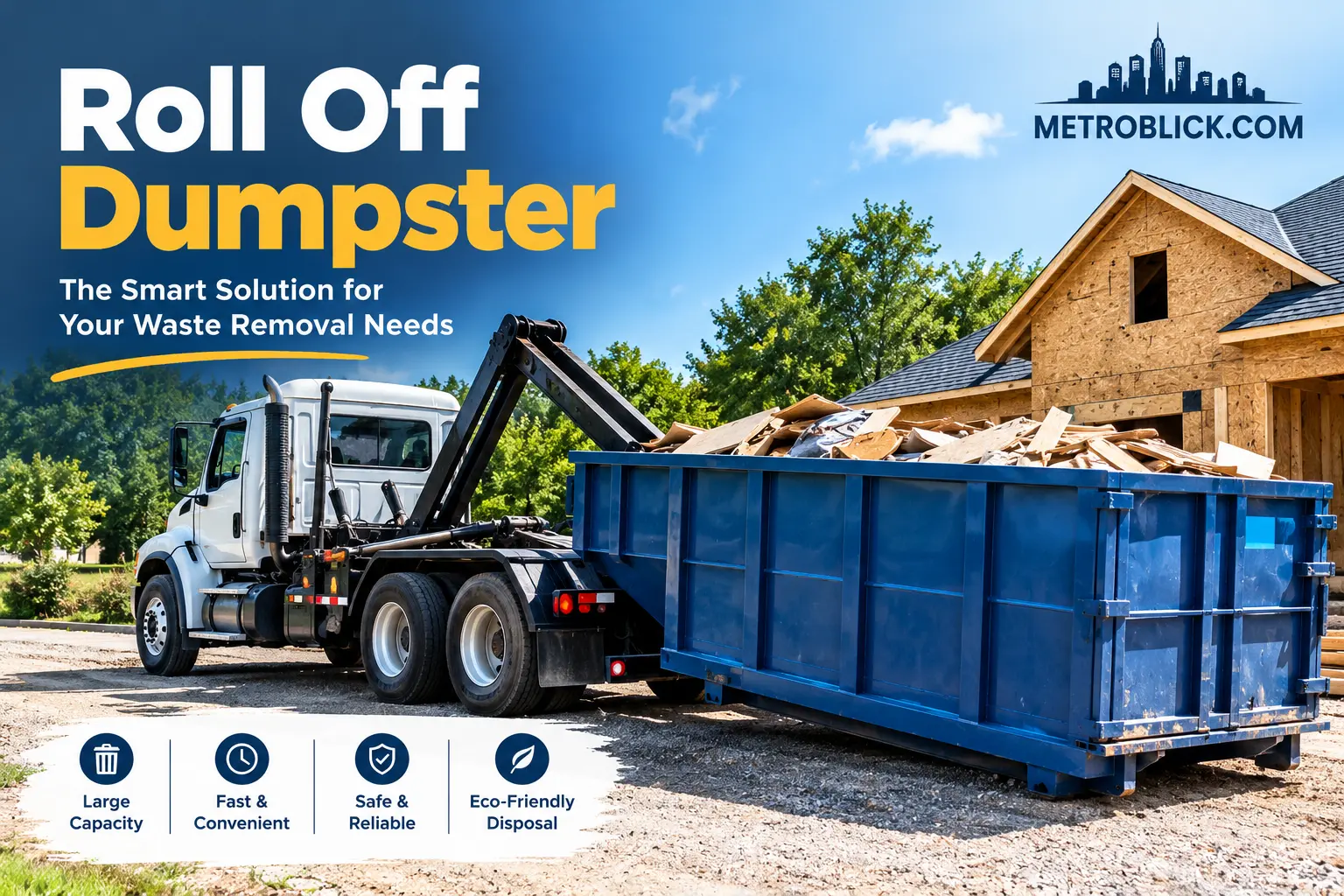
A roll off dumpster can make a home cleanup, renovation, roofing job, construction project, or demolition much easier. If you have never rented one before, however, the process can raise a lot of questions. How much space do you need? Which size should you choose? How much does it cost? What materials are accepted? Can it go on your driveway or street? How long can you keep it?
This guide explains everything you need to know before ordering a roll off dumpster, from choosing the correct size to loading it properly and avoiding unexpected charges. It is designed for beginners, so you do not need previous knowledge about waste containers or dumpster rental.
Whether you are removing old furniture, replacing a roof, remodeling a kitchen, cleaning a garage, or managing construction debris, you will find the essential information here to plan the job confidently.
What Is a Roll Off Dumpster?
A roll off dumpster is a large, open-top waste container designed for temporary use during projects that generate more debris than normal household garbage collection can handle.
The container is delivered to your property by a specialized truck and removed after you finish loading it. The name comes from the way the container is rolled onto and off the delivery truck.
Unlike a permanent commercial dumpster that is emptied regularly, this type of waste container is normally rented for a specific period.
Common uses include:
- Home renovations
- Kitchen and bathroom remodeling
- Roofing projects
- Construction
- Demolition
- Garage cleanouts
- Basement cleanouts
- Estate cleanouts
- Moving cleanup
- Flooring removal
- Deck removal
- Yard and property cleanup
- Commercial renovation
- General construction debris
These containers are usually measured in cubic yards. The cubic-yard rating describes the approximate volume of material the container can hold.
For example, a 20-yard container has a nominal capacity of about 20 cubic yards.
However, capacity is only one part of the decision. Weight limits also matter. A container can have plenty of empty space and still become too heavy if it contains dense materials such as concrete, dirt, brick, or asphalt.
How Does a Roll Off Dumpster Work?
The rental process is relatively simple.
You first determine what kind of project you have, estimate the amount of debris, select an appropriate container, and arrange a delivery date.
The basic process is:
- Identify the type of project.
- Estimate the amount of waste.
- Determine what materials will be discarded.
- Choose a suitable container size.
- Confirm the weight allowance.
- Select a safe delivery location.
- Check whether a local permit is required.
- Schedule delivery.
- Load the approved debris.
- Keep the contents below the required fill level.
- Arrange pickup or follow the scheduled pickup procedure.
- The provider removes and transports the container.
What happens when the container is delivered?
A specialized truck brings the container to the agreed location. The driver needs sufficient room to approach the property and safely place the container.
This means the delivery area must be more than simply large enough for the container itself.
The truck may also need:
- Adequate driveway width
- Turning space
- Overhead clearance
- A clear approach
- Stable ground
- Enough room for the delivery equipment
What happens after pickup?
Once the container is collected, the provider transports the material to an appropriate landfill, transfer station, recycling facility, or other disposal location.
The final handling method depends on the type of debris and local waste regulations.
Roll Off Dumpster Sizes and Dimensions
Dumpster sizes are generally described by their capacity in cubic yards. The most common options include 10-, 15-, 20-, 30-, and 40-yard containers.
Physical dimensions can vary between companies, so two containers with the same capacity may not have exactly the same length, width, or height.
| Size | Approximate dimensions | Typical applications |
|---|---|---|
| 10 yard | 12–14 ft long × 7.5–8 ft wide × 3.5–4 ft high | Small cleanouts and minor projects |
| 15 yard | 14–16 ft long × 7.5–8 ft wide × about 4 ft high | Medium residential cleanup |
| 20 yard | 20–22 ft long × 7.5–8 ft wide × 4–4.5 ft high | Remodeling and larger cleanouts |
| 30 yard | About 22 ft long × 7.5–8 ft wide × 5.5–6 ft high | Major renovation and construction |
| 40 yard | About 22 ft long × 7.5–8 ft wide × about 8 ft high | Large construction and commercial projects |
These measurements are general examples rather than universal specifications. Always confirm the exact dimensions with the rental company before delivery.
Why do dimensions vary?
A cubic-yard rating measures volume, not a standardized physical shape.
One manufacturer may make a container slightly longer and shorter in height, while another may use a different proportion to achieve approximately the same capacity.
That is why you should check both:
- Cubic-yard capacity
- Actual physical dimensions
10-Yard Roll Off Dumpster
A 10-yard container is one of the smaller options and can be useful for projects that produce a relatively limited amount of debris.
Common applications include:
- Small bathroom renovations
- Single-room remodeling
- Garage cleanouts
- Basement cleanup
- Small flooring projects
- Minor landscaping work
- Small roofing jobs
- Limited household junk removal
It can also be useful when you need a lower container that is easier to load manually.
The important consideration is that a small container does not mean unlimited weight capacity.
A container filled with dirt or concrete can reach its permitted weight much faster than one filled with cardboard, furniture, or lightweight household debris.
15-Yard Roll Off Dumpster
A 15-yard container provides an intermediate option between smaller and larger containers.
It can work well for:
- Medium garage cleanouts
- Moderate household cleanup
- Flooring removal
- Small kitchen renovations
- Deck removal
- Medium junk removal
- Smaller roofing projects
Not every dumpster company offers a 15-yard option. In some service areas, customers mainly choose between 10-, 20-, 30-, and 40-yard containers.
If a 15-yard container is available, compare its total cost and physical dimensions with the alternatives rather than assuming that the middle size will automatically provide the best value.
20-Yard Roll Off Dumpster
A 20-yard container is a popular choice for many residential projects because it provides substantially more capacity without reaching the physical size of the largest containers.
Typical uses include:
- Kitchen remodeling
- Bathroom remodeling
- Multiple-room renovation
- Garage cleanouts
- Basement cleanouts
- Flooring replacement
- Deck removal
- Roofing projects
- Moving cleanup
- Moderate construction debris
A 20-yard container can be particularly useful when a project produces a mixture of bulky household items and construction materials.
Before ordering, confirm the weight allowance because two companies offering a 20-yard container can have different rental terms.
30-Yard Roll Off Dumpster
A 30-yard container is designed for larger projects that produce substantial quantities of debris.
It may be appropriate for:
- Major home renovations
- Large construction projects
- Estate cleanouts
- Large roofing projects
- Interior demolition
- Commercial renovation
- New construction
- Large property cleanup
The greater capacity reduces the likelihood of needing multiple containers during a large project.
However, the taller walls can make manual loading more difficult. If workers need to repeatedly lift heavy material over the side, consider how the container design will affect the loading process.
40-Yard Roll Off Dumpster
A 40-yard container is one of the largest commonly available options.
It is generally used for projects such as:
- Large-scale construction
- Commercial remodeling
- Major demolition
- Large property cleanouts
- Industrial cleanup
- Large quantities of lightweight construction waste
Its large capacity makes it useful when debris volume is high.
However, physical space and weight restrictions become increasingly important.
A 40-yard container is not automatically the right choice for heavy debris. If the project primarily involves concrete, dirt, brick, or similar materials, ask the provider about weight restrictions before selecting a large container.
How to Choose the Right Roll Off Dumpster Size
Choosing the correct size requires more than estimating how much trash you have.
Consider these five factors:
- Amount of debris
- Type of material
- Material weight
- Available placement space
- Project duration
Estimate volume
Think about how many pickup-truck loads your debris would occupy. This is not an exact measurement, but it can help you visualize the amount.
Large furniture should also be considered because bulky items can take up considerable space even when they are not particularly heavy.
Consider weight
Weight becomes especially important when disposing of:
- Concrete
- Dirt
- Brick
- Asphalt
- Tile
- Masonry
- Roofing shingles
If your project involves dense materials, ask about the included tonnage before selecting the container.
Measure the placement area
Check:
- Driveway width
- Available length
- Overhead clearance
- Gates
- Trees
- Utility lines
- Vehicles
- Fences
- Slopes
- Ground conditions
What if you are between two sizes?
Compare the price of moving up one size with the potential cost of requiring a second container.
Choosing a slightly larger container can sometimes be more practical, but only if there is enough space and the weight allowance works for the project.
How Much Does a Roll Off Dumpster Cost in 2026?
Dumpster rental prices in 2026 vary significantly by location and project.
There is no single nationwide price because the final bill can depend on:
- Container size
- Location
- Rental duration
- Disposal facility
- Debris type
- Included weight
- Local landfill charges
- Transportation distance
- Fuel costs
- Permit requirements
- Additional rental days
- Weight overages
For many standard residential rentals, several hundred dollars is a reasonable planning expectation, but actual prices can fall below or above that range.
A quote that looks inexpensive at first may not remain inexpensive after disposal charges, additional days, or excess-weight fees are included.
What should a complete quote include?
Ask whether the price includes:
- Delivery
- Pickup
- Disposal
- Rental period
- Included weight
- Taxes
- Fuel charges
- Environmental fees
- Additional-day rates
The most useful number is the estimated total cost, not simply the advertised starting price.
Roll Off Dumpster Prices by Size
Exact prices vary from one market to another, but the following ranges can be used as general 2026 planning figures:
| Container size | Approximate planning range |
|---|---|
| 10 yard | $250–$450 |
| 15 yard | $300–$550 |
| 20 yard | $350–$600 |
| 30 yard | $400–$700 |
| 40 yard | $500–$850 |
These figures are not guaranteed local quotes. Your actual price can be different because of disposal costs, rental duration, local demand, weight limits, delivery distance, and other conditions.
Why can two companies charge different prices for the same size?
One provider might include more weight and a longer rental period, while another may offer a lower base rate but charge separately for disposal or additional days.
Therefore, compare the complete rental terms rather than only the headline price.
What Factors Affect Roll Off Dumpster Rental Cost?
Container size
Larger containers generally cost more because they offer greater capacity and can involve higher transportation and disposal costs.
Location
Local landfill charges, fuel costs, disposal regulations, competition, and transportation distance can affect pricing.
Debris type
Different materials have different disposal requirements.
Mixed household debris may be handled differently from concrete, dirt, roofing materials, or other dense waste.
Weight
Many rental agreements include a specific weight allowance. Exceeding that allowance can result in an additional charge.
Rental duration
A longer rental period can increase the total cost, especially when additional days are billed separately.
Placement
Special delivery requirements or difficult access can sometimes affect the price.
Permit requirements
If the container must occupy public property, permit-related expenses may apply.
Hidden Roll Off Dumpster Rental Fees to Watch For
Before booking, ask about charges that may not appear in the initial advertised rate.
Potential additional fees include:
- Extra rental days
- Weight overages
- Disposal overages
- Permit costs
- Delivery charges
- Pickup charges
- Special-material charges
- Appliance fees
- Mattress fees
- Tire disposal charges
- Cancellation fees
- Failed-delivery fees
- Relocation charges
- Cleaning charges
- Prohibited-material penalties
Five questions to ask before paying
Ask the provider:
- What is my complete price?
- How many rental days are included?
- How much weight is included?
- Which materials are prohibited or charged separately?
- What will I pay if I need the container longer?
Getting these details before delivery can prevent unpleasant surprises later.
Stay updated with the latest insights, fresh stories, and amazing new articles angular cheilitis.
How Long Can You Rent a Roll Off Dumpster?
Rental periods vary between companies.
A one-week rental is common in many markets, but some providers offer shorter or longer arrangements.
Your agreement should clearly identify:
- Delivery date
- Included rental period
- Pickup date
- Extension charges
- Pickup procedure
- Maximum rental period, if applicable
What if your project takes longer?
Contact the provider before the original rental period expires.
Do not assume that the container can remain indefinitely without additional charges.
If you already know that a renovation may take several weeks, ask about extended rental pricing when you request the initial quote.
What Can You Put in a Roll Off Dumpster?
Accepted materials vary according to the provider, disposal facility, and local regulations.
Commonly accepted materials can include:
- Wood
- Drywall
- Flooring
- Cabinets
- Furniture
- Cardboard
- Household junk
- Non-hazardous construction debris
- Roofing materials
- Certain yard debris
However, acceptance is not universal.
One provider may accept a material that another company prohibits.
Before loading, ask for the provider’s accepted-material list.
This is especially important for:
- Concrete
- Dirt
- Appliances
- Electronics
- Tires
- Mattresses
- Paint
- Batteries
- Chemicals
- Propane cylinders
What Can’t You Put in a Roll Off Dumpster?
Many providers prohibit hazardous or specially regulated materials.
Examples may include:
- Certain chemicals
- Solvents
- Pesticides
- Motor oil
- Batteries
- Propane cylinders
- Medical waste
- Asbestos-containing materials
- Certain paints
- Other hazardous substances
Some items require specialized recycling or disposal because ordinary landfill handling is not appropriate.
What about electronics?
Electronics can be subject to local disposal requirements. Computers, televisions, monitors, and other electronic equipment may need to go through an appropriate recycling program.
What about refrigerators and air conditioners?
Appliances containing refrigerants can require special handling.
What about tires?
Tires are frequently subject to separate disposal requirements.
What about paint?
Liquid paint and certain chemical products may not be accepted in a standard container.
When you are uncertain about an item, ask before putting it inside.
Roll Off Dumpster Weight Limits and Overfill Rules
Two separate limitations apply to most rentals:
Volume: how much physical material fits inside the container.
Weight: how heavy the loaded container is allowed to become.
These limits are not interchangeable.
A container can look only half full and still exceed its permitted weight if it contains dense materials.
Which materials can become heavy quickly?
Examples include:
- Concrete
- Dirt
- Brick
- Asphalt
- Tile
- Roofing shingles
- Masonry
How full can you load the container?
The debris generally needs to remain below the provider’s specified fill line.
Do not build a mound above the top.
Overfilled containers can create transportation hazards because loose debris may fall from the container during transport.
The provider may require excess material to be removed before the container can be transported.
Why should weight be distributed?
Concentrating extremely heavy material in one area can create loading and transportation problems.
Distribute material as evenly as practical and follow the provider’s loading instructions.
Roll Off Dumpster Rental for Home Renovations
Home remodeling can generate much more waste than ordinary household garbage service can handle.
Common renovation debris includes:
- Cabinets
- Countertops
- Flooring
- Drywall
- Lumber
- Doors
- Fixtures
- Packaging
- Furniture
- Non-hazardous construction materials
A small bathroom update may require a relatively small container, while a whole-house renovation can require a much larger capacity.
Which size is suitable for remodeling?
A small project may work with a 10- or 15-yard container.
A medium renovation may require around 20 yards.
Major remodeling projects can require 30 or 40 yards.
The actual amount of demolition debris matters more than the number of rooms alone.
Roll Off Dumpster Rental for Roofing Projects
Roof replacement produces a unique combination of volume and weight.
Roofing shingles can become extremely heavy, especially when multiple layers are removed.
Before booking, ask:
- Are roofing shingles accepted?
- What is the weight allowance?
- How many roofing squares can the container reasonably handle?
- Are multiple layers permitted?
- Are wood decking and other roofing materials accepted?
- Are additional disposal charges possible?
Do not select a container based solely on roof size.
The number of existing layers, shingle type, underlayment, decking, insulation, and other tear-off material can change the final load.
Roll Off Dumpster Rental for Construction and Demolition
Construction and demolition projects can produce large amounts of:
- Lumber
- Drywall
- Metal
- Roofing material
- Flooring
- Fixtures
- Packaging
- Concrete
- Brick
- Masonry
- Mixed debris
Large construction projects often require larger containers because of the amount of material produced.
However, demolition needs careful planning because not everything should necessarily go into the same container.
Why does demolition require extra planning?
Certain materials can be hazardous or require specialized disposal.
Before demolition begins, identify:
- Hazardous materials
- Possible asbestos-containing materials
- Heavy debris
- Recyclable materials
- Local disposal requirements
- Weight restrictions
If regulated material is suspected, stop and obtain appropriate professional guidance rather than placing it into a general waste container.
Roll Off Dumpster Rental for Home and Garage Cleanouts
Garage, basement, attic, and whole-house cleanouts often produce a mixture of household junk.
Typical items can include:
- Furniture
- Boxes
- Clothing
- Shelving
- Broken household goods
- Carpet
- Non-hazardous household waste
- Certain appliances, if accepted
Large furniture can consume a surprising amount of space.
Breaking down furniture when safe and permitted can improve how efficiently you use the available capacity.
How do you estimate the required size?
Imagine the debris divided into pickup-truck loads.
A small cleanout may fit in a 10-yard container, while a larger garage or complete-home cleanout may need 20 yards or more.
If you are combining several rooms into one project, estimate the entire volume rather than choosing a size based on only the largest individual item.
Where Can You Place a Roll Off Dumpster?
A suitable placement area should generally be:
- Firm
- Stable
- Accessible
- Relatively level
- Free from overhead hazards
- Large enough for the container
- Large enough for the delivery operation
Common placement areas include:
- Private driveways
- Private parking areas
- Construction sites
- Commercial properties
- Private lots
Can it go on a driveway?
Often, yes.
However, the driveway should be suitable for the weight of the container and delivery equipment.
Consider:
- Concrete condition
- Asphalt condition
- Cracks
- Age
- Slope
- Soft spots
- Width
- Access
Ask the provider whether protective boards or other placement precautions are recommended.
What about grass or soil?
Soft ground can create problems, particularly after rain.
A loaded container is heavy, and the delivery truck can also place substantial pressure on the surface.
Can it be placed on the street?
Possibly, but street placement can involve local permits and restrictions because the container may occupy public right-of-way.
Always check the local requirements before delivery.
Do You Need a Permit for a Roll Off Dumpster?
Permit requirements depend primarily on where the container is placed and the rules of the local authority.
A container located entirely on private property may be treated differently from one placed on:
- A public street
- Sidewalk
- Alley
- Public parking area
- Public right-of-way
Some cities require permits for containers occupying public property.
Others may have specific requirements regarding:
- Reflective markings
- Safety lights
- Placement distance
- Parking restrictions
- Duration
- Street obstruction
The safest approach is to confirm the requirement with the dumpster provider and the relevant local authority before delivery.
How Is a Roll Off Dumpster Delivered and Picked Up?
Delivery involves a specialized truck positioning the container at the agreed location.
The driver needs adequate clearance to approach the placement area.
Before delivery
Prepare the site by:
- Moving vehicles
- Removing tools and equipment
- Clearing branches where necessary
- Unlocking gates if required
- Confirming the access route
- Checking overhead clearance
- Marking the intended location
During delivery
Keep people and pets away from the truck and container.
Heavy equipment can move unexpectedly, so do not stand close to the truck during placement.
Before pickup
Make sure:
- The container is accessible
- No vehicle is blocking it
- Waste is below the required fill level
- Prohibited materials have not been added
- The access route remains clear
If the driver cannot safely reach the container, pickup can be delayed and an additional trip may potentially be required.
How to Load a Roll Off Dumpster Properly
Safe loading helps you use the available space efficiently while avoiding overfilling.
A practical loading method is:
- Place large materials carefully.
- Put bulky items into available spaces.
- Add smaller permitted debris around larger pieces.
- Distribute heavy material across the container.
- Monitor the fill height as you work.
- Stop before reaching the maximum permitted level.
Should heavy items go on the bottom?
Generally, placing heavier material lower in the container can help with stability, while distributing the weight across the container helps avoid concentrating excessive weight in one area.
However, follow the provider’s specific instructions if they differ.
What should you never do?
Do not:
- Put prohibited materials inside
- Load above the fill line
- Attempt to move a loaded container
- Burn waste inside the container
- Enter the container while loading
- Compress waste in a way that violates rental rules
- Place extremely heavy debris without confirming the weight allowance
Roll Off Dumpster vs. Other Dumpster Types
Different waste-management options are designed for different situations.
Roll-off container
A temporary, open-top container intended for projects producing substantial amounts of debris.
Front-load dumpster
A smaller commercial waste container typically serviced on a recurring schedule.
Residential trash cart
Designed for routine household garbage rather than major renovation or construction waste.
Junk removal service
A junk removal company generally provides labor to collect and haul away your unwanted items.
With self-service dumpster rental, you usually load the container yourself.
Bag-style waste container
A flexible waste bag can work for smaller cleanup jobs but provides considerably different capacity, placement, and loading characteristics.
Which option should you choose?
Choose according to the project.
If you have a large temporary cleanup and can load the material yourself, a temporary open-top container may be practical.
If you need workers to remove the items for you, a junk removal service may be more appropriate.
If you have recurring business garbage, a front-load service may make more sense.
Roll Off Dumpster Rental Near Me
When searching for a local dumpster rental provider, distance is useful but should not be the only deciding factor.
Compare:
- Service area
- Container sizes
- Exact dimensions
- Total price
- Included weight
- Rental period
- Accepted materials
- Pickup process
- Delivery availability
- Customer reviews
- Permit assistance
Local pricing can vary significantly because disposal facilities, transportation costs, regulations, demand, and competition differ between markets.
For a local service business, accurate business information also matters. Customers should be able to determine exactly where the company operates, what services it provides, and how to request a quote.
How to Rent a Roll Off Dumpster
The simplest way to arrange a rental is to follow a structured process.
Step 1: Define the project
Know what you are cleaning, demolishing, renovating, or removing.
Step 2: Identify the waste
Make a list of the major materials.
Step 3: Estimate the volume
Estimate how much space the debris will occupy.
Step 4: Check weight
If the project includes dense materials, ask about tonnage before selecting the container.
Step 5: Choose a size
Compare capacity, dimensions, weight allowance, and price.
Step 6: Select the placement area
Make sure there is enough room for delivery and pickup.
Step 7: Check permits
Determine whether the location is private or public and whether local authorization is required.
Step 8: Request a complete quote
Ask about all included and potential charges.
Step 9: Confirm the rental period
Know exactly when the rental starts and ends.
Step 10: Prepare the property
Clear the delivery route before the truck arrives.
Step 11: Load correctly
Use only approved materials and stay within the weight and fill restrictions.
Step 12: Arrange pickup
Follow the company’s pickup procedure and keep the container accessible.
How to Save Money on a Roll Off Dumpster Rental
The cheapest advertised rate is not always the cheapest final price.
Use these strategies instead.
Choose the correct capacity
An undersized container can require a second rental, while an oversized container can mean paying for unused space.
Know your weight allowance
This is especially important for concrete, dirt, brick, roofing material, and other dense debris.
Ask about additional fees
Find out about:
- Extra days
- Weight overages
- Disposal charges
- Permit costs
- Special-material charges
- Failed delivery
- Cancellation
Prepare before delivery
If the project is ready when the container arrives, you can make better use of the rental period.
Separate restricted waste
Don’t put hazardous or specially regulated materials into the general container.
Compare complete quotes
Ask each provider for equivalent information.
A useful comparison is:
Base rental + delivery + pickup + included disposal + included weight + rental period + potential extras = expected project cost
That gives you a much clearer picture than comparing starting prices alone.
FAQs
What is a roll off dumpster used for?
It is a temporary open-top waste container used for projects that produce substantial debris, including renovations, construction, roofing, demolition, and large cleanouts.
How are dumpster sizes measured?
They are generally measured in cubic yards. The number represents approximate volume rather than a universal physical dimension.
What size container do I need for a garage cleanout?
A small cleanout may fit a 10- or 15-yard container. A large garage or combined household cleanout may require a 20-yard or larger option.
How much does a dumpster cost in 2026?
Many standard rentals fall somewhere in the several-hundred-dollar range, but the actual price varies by location, size, rental period, disposal charges, debris type, and weight allowance.
Does the rental price include disposal?
It often includes a certain amount of disposal, but terms vary. Some providers include a specified weight allowance and charge extra for additional tonnage.
How long can I keep a dumpster?
The included period depends on the provider. One week is common in many markets, but shorter and longer rental periods are available.
Can I put concrete in a dumpster?
Some providers accept concrete, while others require special arrangements because concrete is extremely heavy. Always ask before loading it.
Can I put dirt in a dumpster?
Dirt may be restricted or subject to strict weight limits. Confirm acceptance and pricing before disposal.
Can roofing shingles go in a dumpster?
Many providers accept shingles, but roofing debris can become heavy quickly. Confirm the weight allowance and accepted-material policy.
Can furniture go in a dumpster?
Furniture is commonly accepted as general debris, but certain items or components may have special disposal requirements.
Can I put paint in a dumpster?
Liquid paint and certain chemical products may be prohibited. Check the provider’s accepted-material list first.
Can batteries go in a dumpster?
Batteries may require separate disposal and should not be placed inside unless the provider specifically confirms acceptance.
Can I put a refrigerator in a dumpster?
Refrigerators may require special handling because of refrigerants and other components. Confirm acceptance before disposal.
Can I put tires in a dumpster?
Tires are often subject to separate disposal requirements. Ask the provider before adding them.
Can a dumpster be placed on a driveway?
Often yes, provided the driveway and surrounding area can safely accommodate the container and delivery equipment.
Will a dumpster damage my driveway?
A heavy container and delivery truck can put considerable pressure on a driveway. Surface condition, weight, weather, and equipment all matter. Ask about protective measures if you have concerns.
Can a dumpster be placed on a public street?
It may be possible, but a permit or other local authorization may be required. Check local regulations before delivery.
Can I fill the container above the top?
No. Debris generally needs to remain at or below the provider’s required fill level to allow safe transportation.
What happens if the container is overweight?
Depending on the rental agreement, you may face an additional charge or need to remove material before the container can be transported.
Can I rent a dumpster for one day?
Some companies offer short-term rentals, but minimum rental periods vary. Ask about one-day pricing and availability.
Can I extend my rental period?
Often yes, depending on availability. Additional days may incur extra charges.
How much space does delivery require?
The exact requirement depends on the container and delivery truck. You need sufficient width, length, turning space, and overhead clearance.
Do I have to be home when the container is delivered?
Not necessarily. Some providers can deliver when the customer is away if the location is clearly identified and accessible. Confirm the policy beforehand.
Can I move the container myself?
No. Do not attempt to move a loaded container yourself. Contact the rental company if the container needs to be relocated.
How do I choose between two dumpster sizes?
Compare the estimated debris volume, material weight, physical dimensions, price, and possibility of needing a second container. If you are close to the capacity limit, ask the provider which size fits the project.
Conclusion
Choosing the right container becomes much easier once you understand the factors that actually determine a successful rental. The most important considerations are debris volume, material type, weight, container dimensions, rental duration, placement space, accepted materials, and the complete price.
Smaller containers can work well for limited cleanouts and minor renovations, while 20-yard options are often suitable for medium residential projects. Larger 30- and 40-yard containers can handle substantial construction, renovation, and demolition volumes, provided the property has enough space and the load remains within the permitted weight.
Before scheduling delivery, ask for a complete quote and confirm the rental period, included weight, accepted materials, additional fees, pickup procedure, and placement requirements. Preparing the site before delivery can also prevent delays and unnecessary charges.
Stay updated with the latest insights, fresh stories, and amazing new articles dr melaxin.


One thought on “Roll Off Dumpster Guide 2026: Sizes, Costs, Rental & Tips”