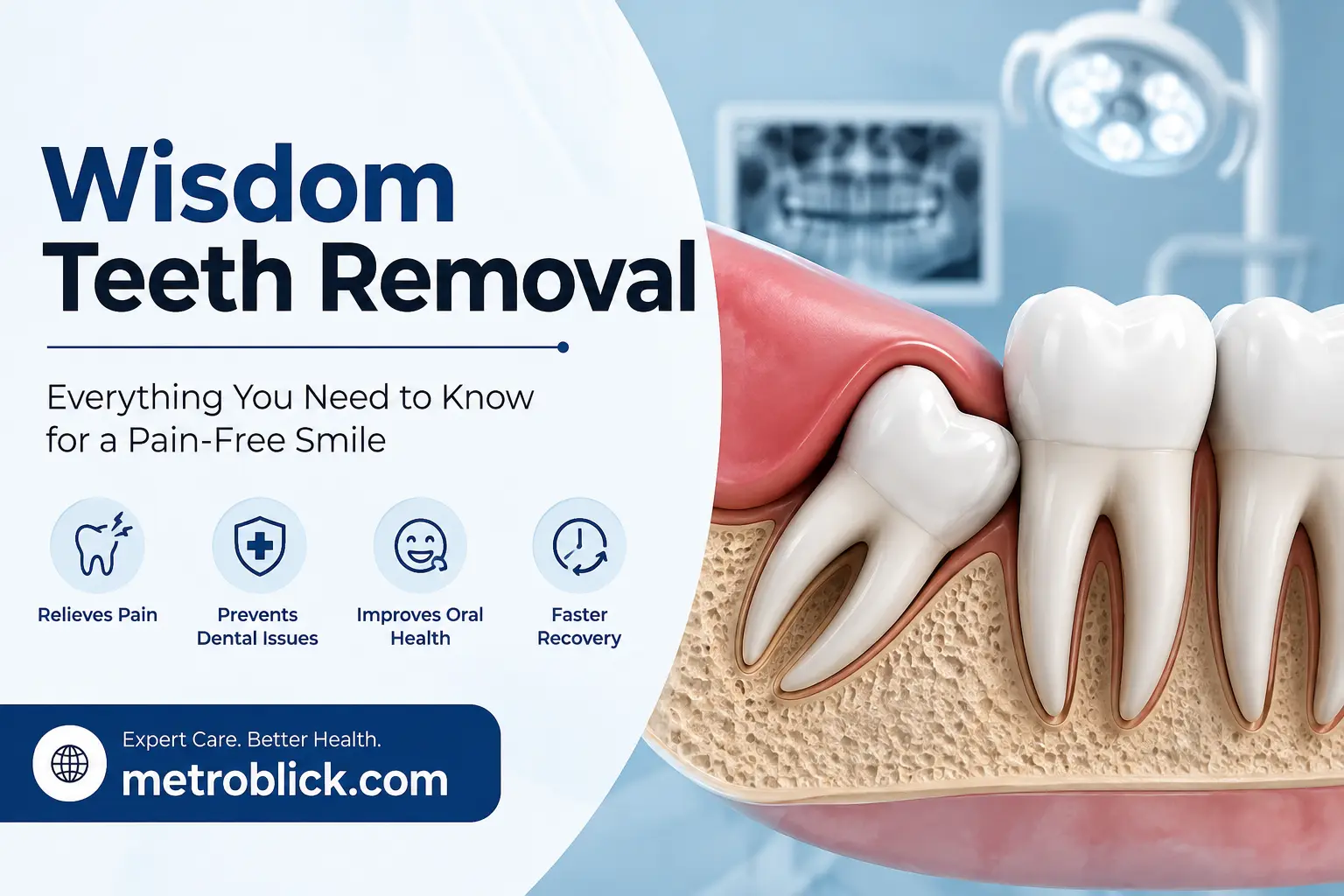
Many people start thinking about their last set of molars when they experience pain, swelling, or pressure at the back of their mouth. These teeth, commonly called wisdom teeth, usually appear during the late teenage years or early adulthood. While some people never experience problems, others develop issues because there is not enough space for these teeth to grow properly.
Understanding the treatment process before visiting a dental professional can remove uncertainty and help patients make better decisions. This guide explains why these teeth create problems, how dentists evaluate them, what happens during treatment, recovery expectations, possible risks, costs, and important aftercare steps.
What Is Wisdom Teeth Removal?
Wisdom teeth removal is a dental procedure that involves taking out one or more third molars when they may cause pain, infection, damage, or future oral health problems. These teeth are located at the back corners of the mouth and are the final permanent teeth to develop.
The treatment can be a simple extraction when the tooth is fully visible above the gum line. If the tooth is trapped under gum tissue or bone, a surgical extraction may be required. A dentist or oral surgeon uses dental X-rays and a physical examination to decide the safest approach.
Why Do You Need Wisdom Teeth Removal?
The main reason people require treatment is that third molars often do not have enough room to grow correctly. Limited jaw space can cause teeth to become tilted, trapped, or partially erupted.
Problematic teeth can lead to gum infection, tooth decay, damage to nearby molars, jaw discomfort, and repeated inflammation. In some cases, removal is recommended before serious symptoms appear because prevention can reduce future complications.
Signs You Need Wisdom Teeth Removal
Some common warning signs include pain behind the second molars, swollen gums, difficulty opening the mouth, bad breath, unpleasant taste, and sensitivity while chewing.
However, symptoms are not always obvious. Some impacted teeth remain hidden for years while slowly affecting surrounding structures. Regular dental examinations and imaging help identify problems early.
What Happens During Wisdom Teeth Removal?
Before treatment begins, the dentist reviews your medical history and examines the position of the teeth. Dental imaging helps identify whether the tooth is impacted, how close it is to nerves, and what extraction method is suitable.
During the appointment, anesthesia is provided to keep the patient comfortable. The tooth is carefully removed, the area is cleaned, and the dentist provides instructions to support proper healing.
Wisdom Teeth Removal Procedure Step by Step
The procedure usually follows several steps. First, the dentist performs an examination and reviews X-rays. Next, the selected anesthesia option is administered.
If the tooth is fully erupted, it may be removed using standard extraction tools. Impacted teeth may require a small gum opening and careful removal in sections. After the tooth is removed, the area is cleaned and stitches may be placed if needed.
The final stage focuses on controlling bleeding and explaining recovery instructions.
How Long Does Wisdom Teeth Removal Take?
The appointment length depends on the number of teeth being treated and the complexity of the case. A straightforward extraction may be completed quickly, while impacted teeth usually require more time.
Most patients should expect the complete visit to take longer than the actual procedure because preparation, anesthesia, and recovery instructions are included.
Does Wisdom Teeth Removal Hurt?
Many patients worry about pain, but modern dental techniques make the procedure manageable. During treatment, anesthesia prevents sharp pain, although some pressure and movement may be noticeable.
After treatment, mild soreness, swelling, and jaw stiffness are common. Following medication instructions and proper aftercare usually helps patients recover comfortably.
Wisdom Teeth Removal Anesthesia Options
Anesthesia choices depend on the patient’s comfort level and the complexity of the procedure. Local anesthesia numbs the treatment area while keeping the patient awake.
Sedation options such as IV sedation may be used for anxious patients or more complex procedures. In some situations, general anesthesia may be considered. The dental professional selects the safest option based on individual needs.
Types of Wisdom Teeth Removal
The extraction method depends on how the tooth has developed. Simple extraction is used when the tooth is fully visible and easy to access.
Surgical extraction is used when teeth are impacted beneath gum tissue or bone. The dentist considers tooth position, root shape, and surrounding anatomy before choosing the method.
Stay updated with the latest insights, fresh stories, and amazing new articles Summa Cum Laude.
Impacted Wisdom Teeth Removal
Impacted teeth are unable to fully emerge because they are blocked by nearby teeth, bone, or soft tissue. They are a common reason people require oral surgery.
Ignoring impacted teeth may increase the chance of infection, cyst development, gum problems, and damage to neighboring teeth. Dental imaging helps determine the severity of the condition.
Wisdom Teeth Removal Recovery Timeline
Recovery is different for every patient, but many people notice improvement within the first week. Swelling and discomfort are usually strongest during the first few days.
The gums continue healing over the following weeks. Following recovery instructions, eating soft foods, and avoiding activities that disturb the extraction area can support faster healing.
What to Expect After Wisdom Teeth Removal
Patients commonly experience swelling, mild bleeding, soreness, and difficulty opening the mouth after treatment. These effects are usually temporary.
The healing process depends on the complexity of the extraction and how carefully the patient follows aftercare instructions.
Wisdom Teeth Removal Aftercare Tips
Proper aftercare protects the extraction site and reduces complications. Patients should avoid disturbing the area, follow medication guidance, keep the mouth clean as advised, and rest during the first stage of recovery.
Maintaining hydration and choosing suitable foods can also make the recovery period easier.
Foods to Eat After Wisdom Teeth Removal
Soft foods are usually recommended immediately after treatment. Examples include yogurt, smoothies, mashed foods, eggs, soft pasta, and blended soups.
As healing improves, patients can slowly return to regular foods. Chewing should be avoided near the extraction area until it becomes comfortable.
Foods to Avoid After Wisdom Teeth Removal
Hard, crunchy, spicy, and sticky foods can irritate the healing area. Smoking and using straws should also be avoided because suction can affect the protective blood clot.
Following food restrictions during early recovery lowers the risk of complications such as dry socket.
How to Reduce Swelling After Wisdom Teeth Removal
Swelling is a normal part of healing. Applying cold packs during the first day, resting properly, and keeping the head elevated can help manage discomfort.
Patients should avoid heavy exercise during early recovery because increased blood flow may worsen swelling or bleeding.
Wisdom Teeth Removal Complications and Risks
Although most procedures heal without major problems, patients should understand possible risks. These may include infection, bleeding, delayed healing, and nerve-related symptoms.
Following professional instructions and contacting the dental office when unusual symptoms appear helps prevent serious issues.
Dry Socket After Wisdom Teeth Removal
Dry socket occurs when the blood clot protecting the extraction area becomes lost or breaks down too early. It can cause increased pain and sensitivity.
Avoiding smoking, following cleaning instructions, and protecting the extraction area are important steps to reduce this risk.
Wisdom Teeth Removal Cost
The cost depends on several factors, including the number of teeth removed, whether the teeth are impacted, anesthesia type, and the dental provider’s location.
Simple cases usually cost less than complex surgical procedures. A consultation provides the most accurate estimate based on the patient’s condition.
Factors That Affect Wisdom Teeth Removal Cost
Important cost factors include dental imaging, extraction difficulty, sedation, professional fees, and additional treatment requirements.
Patients should ask for a complete cost explanation before scheduling the procedure.
Wisdom Teeth Removal With Insurance
Some dental insurance plans may cover part of the treatment depending on policy details. Coverage often depends on medical necessity, network providers, and plan limitations.
Checking benefits before treatment helps patients understand their expected expenses.
Wisdom Teeth Removal Without Insurance
Patients without insurance can discuss payment plans, financing options, and available alternatives with dental offices.
Cost should be considered alongside safety, experience, and quality of care rather than choosing only the lowest price.
How to Prepare for Wisdom Teeth Removal
Preparation includes arranging transportation when sedation is used, discussing medications, following eating instructions, and preparing comfortable foods for recovery.
A clear plan before the appointment can reduce stress and make healing easier.
Choosing the Right Dentist for Wisdom Teeth Removal
Selecting an experienced dentist or oral surgeon is an important part of safe treatment. Patients should consider qualifications, experience, technology, and communication.
A good consultation allows patients to ask questions and understand every stage of their treatment plan.
FAQs
How long does recovery take?
Most patients improve within several days, while complete healing continues over the following weeks depending on the complexity of treatment.
Can several teeth be removed at once?
Yes, many patients have multiple third molars removed during one appointment when it is appropriate.
When should I contact my dentist?
Patients should contact their dental provider if they experience severe pain, heavy bleeding, fever, or worsening symptoms.
Conclusion
Understanding the reasons behind treatment, the procedure process, recovery expectations, and aftercare steps helps patients feel prepared.
A professional dental evaluation is the best way to determine whether treatment is necessary. With modern techniques and proper care, most patients recover successfully and maintain better long-term oral health.
Stay updated with the latest insights, fresh stories, and amazing new articles Class Companion.